Guides · Plants & layout
Aquarium plants, lighting and substrate for beginners
Plan a low-tech planted aquarium around fish welfare, suitable substrate, a steady light period and accessible maintenance.
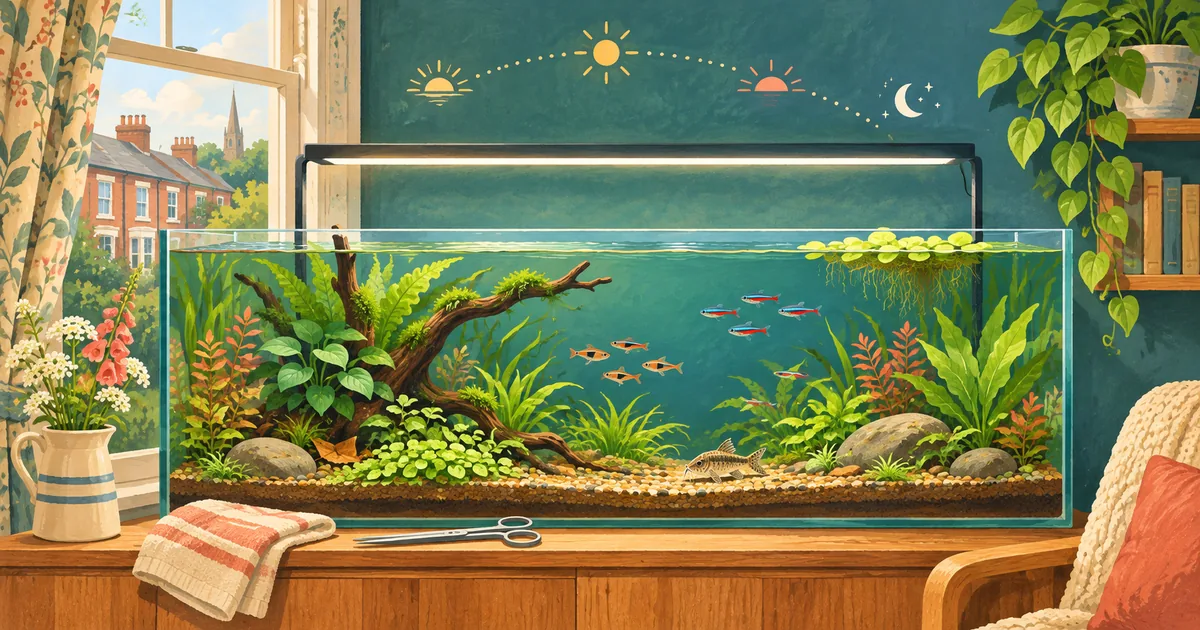
Plants can provide shade, shelter and visual barriers, but they do not replace filtration or water changes. Choose plants, substrate and light as one system, with the fish’s behaviour and the keeper’s maintenance time in mind.
Start with livestock needs
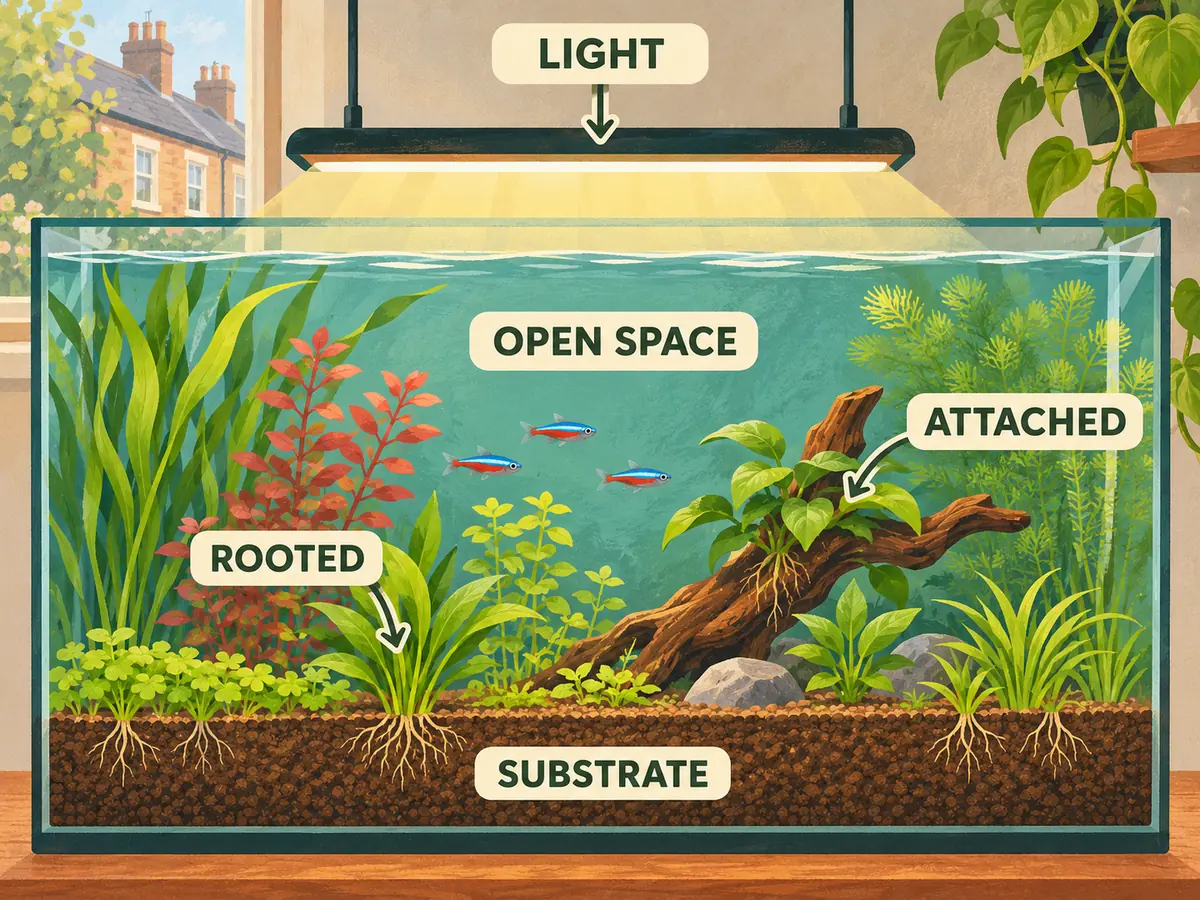
Bottom-foraging fish need a substrate that will not injure their mouths or barbels. Digging fish may uproot delicate stems. Territorial fish can benefit from broken sight lines, while active open-water swimmers still need clear space. Secure all rocks and wood so burrowing cannot undermine them.
Substrate choices
Inert sand or smooth gravel can be simple, while nutrient substrates support rooted plants but may affect water chemistry or require a cap. Rinse only as the maker directs. Estimate depth from the footprint, but avoid deep unmanaged pockets and leave access around hardscape for siphoning.
Light
The RSPCA suggests a consistent day-night cycle and gives eight to ten hours as suitable for most species. Begin conservatively and adjust from plant response and algae rather than leaving lights on late for viewing. A timer improves consistency. Direct window sun adds heat and variable light, so it is a poor substitute.
Low-tech maintenance
Choose undemanding species that suit the temperature and light. Remove decaying leaves, keep intakes clear and thin growth before it blocks surface exchange. Fertilisers and carbon products must be used exactly as directed and kept away from children and pets. Test water after any major substrate or planting change.
Plants, ornaments and swimming space
OATA describes decoration and plants as recommended enrichment, while reminding keepers that both take up space. Live plants help to remove nitrate, and ornaments give less boisterous or reclusive fish a safe retreat. Plan hardscape so it does not eat into the open water that active species need, and remember that every rock and root displaces water, which lowers the true volume used for stocking and dosing calculations. Choose smooth, aquarium-safe pieces, check that nothing traps fish or blocks an intake, and add plants before the fish arrive so maintenance can settle into a routine first.
Build the layout in maintenance order
Place the substrate first, then hardscape, then plants, while the tank is still easy to reach. Keep rock weight off unsupported glass edges and make sure a digging fish cannot undermine a stack. Leave a clear strip beside the front glass for siphoning and enough space behind stems to clean the pane. Attach rhizome plants to suitable wood or rock rather than burying the growing point; rooted plants need room below, while floating plants must not cover the whole surface or block the filter outlet.
Plant before livestock so loose stems, cloudy substrate and equipment adjustments can settle without stressing fish. Fill onto a plate or bag to reduce disturbance, start the filter, and check that leaves do not obstruct the intake. The OATA setup sheet recommends plants and decoration for enrichment but notes that they reduce swimming space.
Match the three components
| Planting aim | Substrate question | Lighting response | Maintenance consequence |
|---|---|---|---|
| Epiphytes on wood or rock | Is an inert floor sufficient? | Begin with a modest, timed period | Remove damaged leaves without uprooting |
| Rooted rosette plants | Is the bed deep and suitable enough for roots? | Avoid shading the crown | Use fertiliser only as its maker directs |
| Dense stem background | Can debris still be siphoned? | Thin tops before lower leaves are shaded | Replant healthy tips and remove decaying bases |
| Floating cover | Will fish still have open surface access? | Check that lower plants receive light | Corral growth away from intakes and feeding areas |
There is no single ideal substrate depth or light intensity for every planting plan. The tank height, lamp output and plant species change what reaches a leaf. Start conservatively, photograph the same area weekly and adjust one variable at a time.
Diagnose algae without chasing it
Algae is an outcome, not a diagnosis. First check whether the timer changed, direct sun reaches the tank, plants are being shaded, or decaying material has accumulated. Shorten excessive viewing hours gradually and remove accessible algae manually. Do not black out a stocked aquarium or add an algae-eating animal without researching that animal’s adult size, social needs and diet.
If plants turn pale, develop holes or stop growing, check water parameters, temperature, root condition and whether the chosen species is genuinely aquatic. Fertiliser is not automatically the answer; excessive or unsuitable dosing can worsen imbalance. The RSPCA recommends a consistent day-night cycle and gives eight to ten hours of light as suitable for most fish, but plant response and species welfare still govern adjustment.
Worked substrate estimate
For a 60 cm by 30 cm base, a uniform 4 cm layer has a geometric volume of 7.2 litres: 60 × 30 × 4 ÷ 1,000. This estimates volume, not bag weight; grain size and density differ, so use the substrate maker’s coverage information. A slope averaging 4 cm should be calculated from the average depth, not the deepest point.
Topic-specific mistakes
- Burying a plant’s rhizome and then treating rot as a nutrient shortage.
- Choosing sharp gravel for fish that sift or rest on the bottom.
- Letting floating plants seal the outlet area and reduce surface movement.
- Adding unverified stone that may alter hardness or contain contaminants.
- Increasing light and fertiliser together, which hides which change caused the response.
- Leaving plant pots, rock gaps or ornaments where a fish can become trapped.
The finished layout must serve its occupants, not only the photograph. Preserve open swimming lanes, shaded retreats and visible feeding areas, and redesign anything that prevents normal behaviour or safe cleaning.