Guides · Livestock
How to quarantine and acclimate new fish
Reduce disease and shock risk with a prepared quarantine tank, careful transport and species-appropriate acclimation.
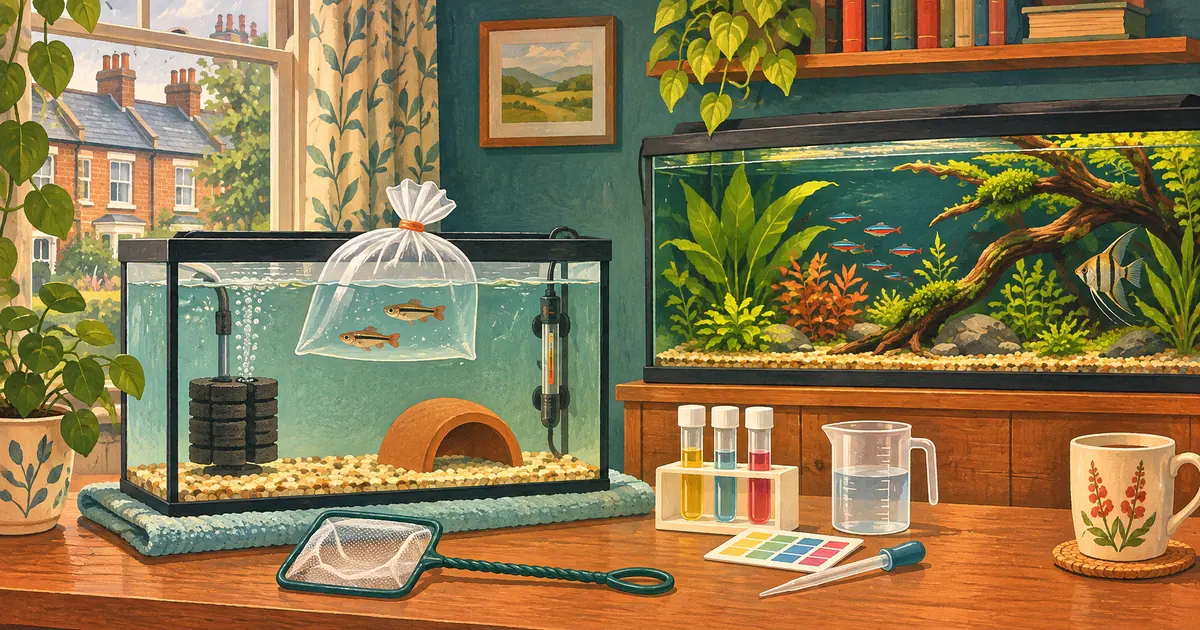
Quarantine is a separate, cycled and observable environment used before new fish join an established community. It reduces—but cannot eliminate—the chance of introducing disease and gives stressed fish a quieter transition.
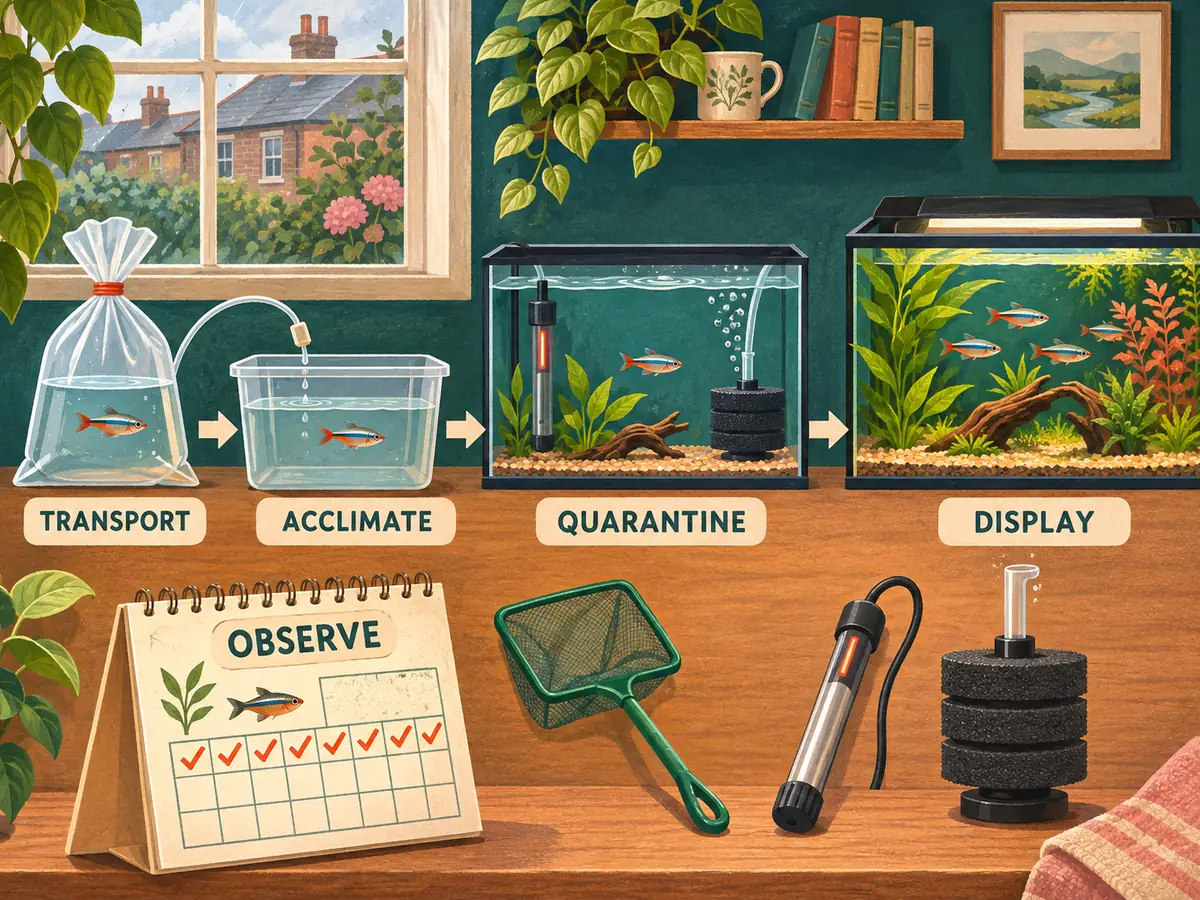
Prepare first
The quarantine tank needs mature biological filtration, a suitable heater where required, cover, gentle hiding places and dedicated net and siphon. Bare or simple surroundings make observation and cleaning easier. It must still meet the species’ temperature, water and social needs.
At the shop and on the journey
OATA advises looking for clear eyes, intact scales and fins, appropriate swimming and steady breathing, and avoiding a purchase when sick fish share the system. Take the direct route home and keep the bag insulated from temperature extremes. Do not buy fish before the receiving tank is ready.
Acclimation
The RSPCA describes floating the closed bag to equalise temperature, then netting fish into the aquarium and discarding shop water. Follow current advice from the responsible retailer for the exact species and journey, because water chemistry and bag conditions matter. Keep lights low and observe quietly.
During quarantine
Test water frequently, feed lightly and observe appetite, breathing, faeces, skin and fins. Do not medicate without a reason and correct diagnosis; treatments can harm fish or the filter. Seek an aquatic vet or experienced professional when signs are unclear. Reset or disinfect equipment appropriately before reuse.
Why healthy-looking fish still need care
OATA warns that some diseases can be carried without fish showing any clinical signs, which is why a quarantine period is useful even when new arrivals look well. Adding fish also adds waste: OATA explains that the filter needs a "mini" maturation each time stock or feeding increases, and that stocking too quickly can cause new tank syndrome, in which ammonia and nitrite rise because the bacteria cannot keep up. Introduce small groups, keep feeding modest for the first days and test more often after each addition. If you are unsure about a species' needs or compatibility, ask a responsible retailer before buying, not afterwards.
Keep the systems genuinely separate
Label nets, buckets, siphons and towels for quarantine and store them apart. Splashing hands or sharing a wet test tube can bypass the separation. Position the quarantine tank so aerosols and water cannot reach the display, but keep it accessible enough for quiet observation. A simple bare base makes faeces and uneaten food visible; inert hide structures reduce stress without creating inaccessible debris traps.
| Before purchase | During transfer | In quarantine |
|---|---|---|
| Confirm scientific name and group needs | Keep the bag closed and insulated | Record appetite, breathing, skin, fins and faeces |
| Compare shop water advice with home water | Minimise journey time and vibration | Test ammonia, nitrite and temperature frequently |
| Reject a system containing visibly sick fish | Dim receiving-tank lights | Use dedicated equipment and controlled feeding |
| Prepare mature filtration in advance | Discard transport water appropriately | Seek diagnosis before medication |
Acclimation is not quarantine
Temperature equalisation handles only one variable. Water chemistry, dissolved gases and waste inside a transport bag also matter, so prolonged improvisation can be harmful. Follow responsible retailer or aquatic-veterinary advice for the species and journey. The RSPCA describes floating the closed bag and then netting fish into the aquarium without adding shop water; do not turn that general sequence into an hour-long ritual without evidence.
After release, keep lights low, provide secure cover and delay feeding according to species-specific advice. Observe from a distance before approaching the glass. Record the arrival time and first normal behaviours so a later change is recognisable.
Decide the quarantine period by risk
There is no universal number of days in the cited general care sheets. The source, species, disease history, temperature and signs all affect the decision. Ask an aquatic vet or competent specialist for a protocol appropriate to the fish rather than claiming that a fixed calendar catches every pathogen. Extend observation when signs appear and do not move fish merely because a planned date arrives.
OATA warns that fish may carry disease without clinical signs. It also explains that adding stock increases biological load, so the display needs closer testing after transfer even when quarantine water remained perfect.
Respond to signs methodically
First measure temperature, ammonia and nitrite and verify filter operation. Note which fish is affected, when signs began, respiration, lesions, appetite and recent treatments. Photograph changes if this can be done without stress. Do not combine medicines or dose the display “just in case”: products can interact, harm invertebrates or bacteria, and obscure diagnosis. Contact an aquatic vet for serious or unclear illness.
Quarantine mistakes
- Setting up the spare tank on arrival day with an unmatured filter.
- Sharing a siphon and believing separate nets are enough.
- Buying from a bank containing sick fish because the chosen individual looks normal.
- Adding preventive medication without a diagnosis or checking contraindications.
- Moving a shoaling species alone without considering social welfare.
- Pouring shop water into the receiving system after acclimation.
When quarantine ends, transfer fish with dedicated clean equipment, continue enhanced testing in the display and clean the temporary system according to disease-specific professional advice. Preserve mature media only when it is safe to do so; never move potentially contaminated media into the main aquarium.